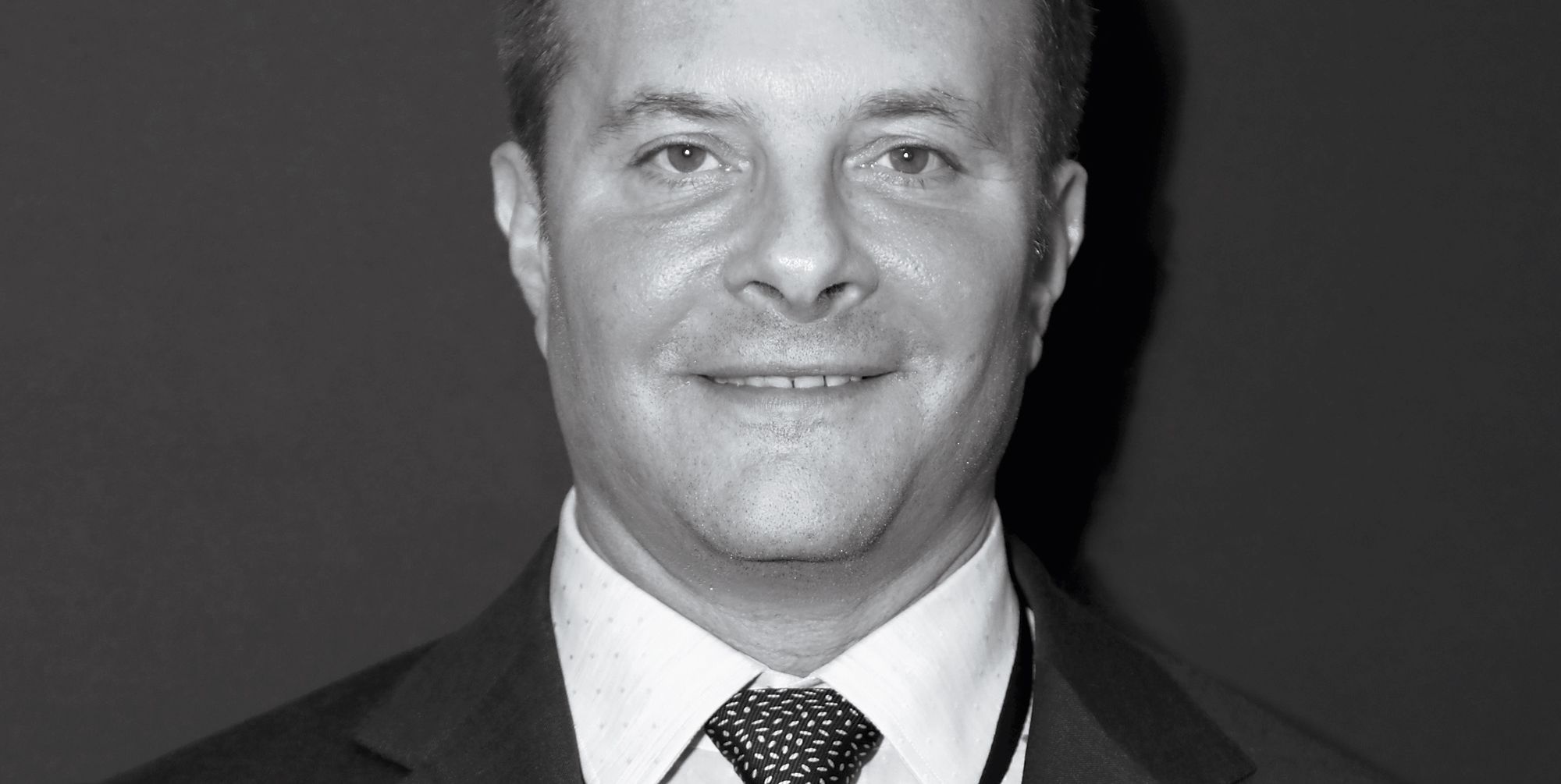
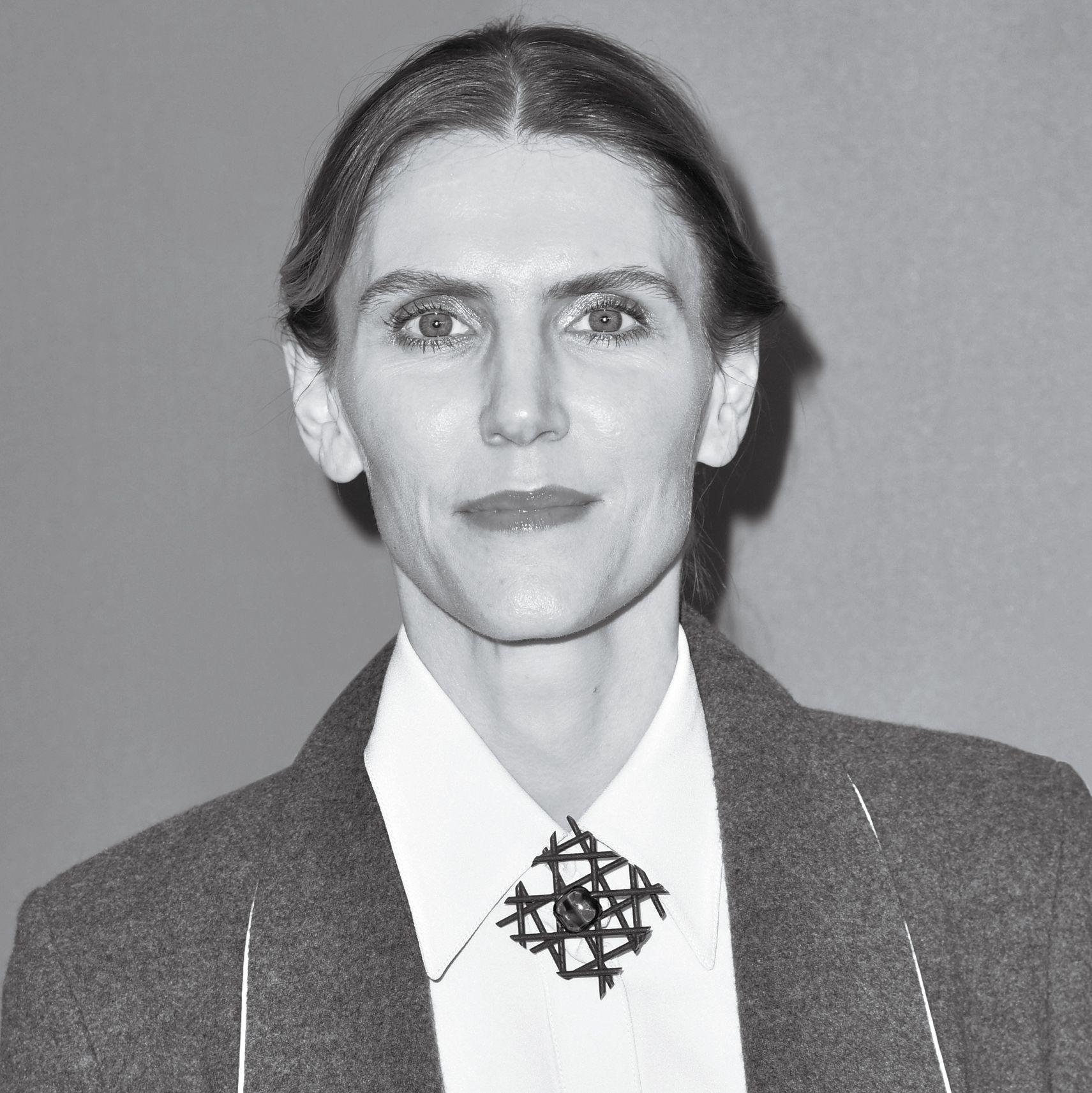
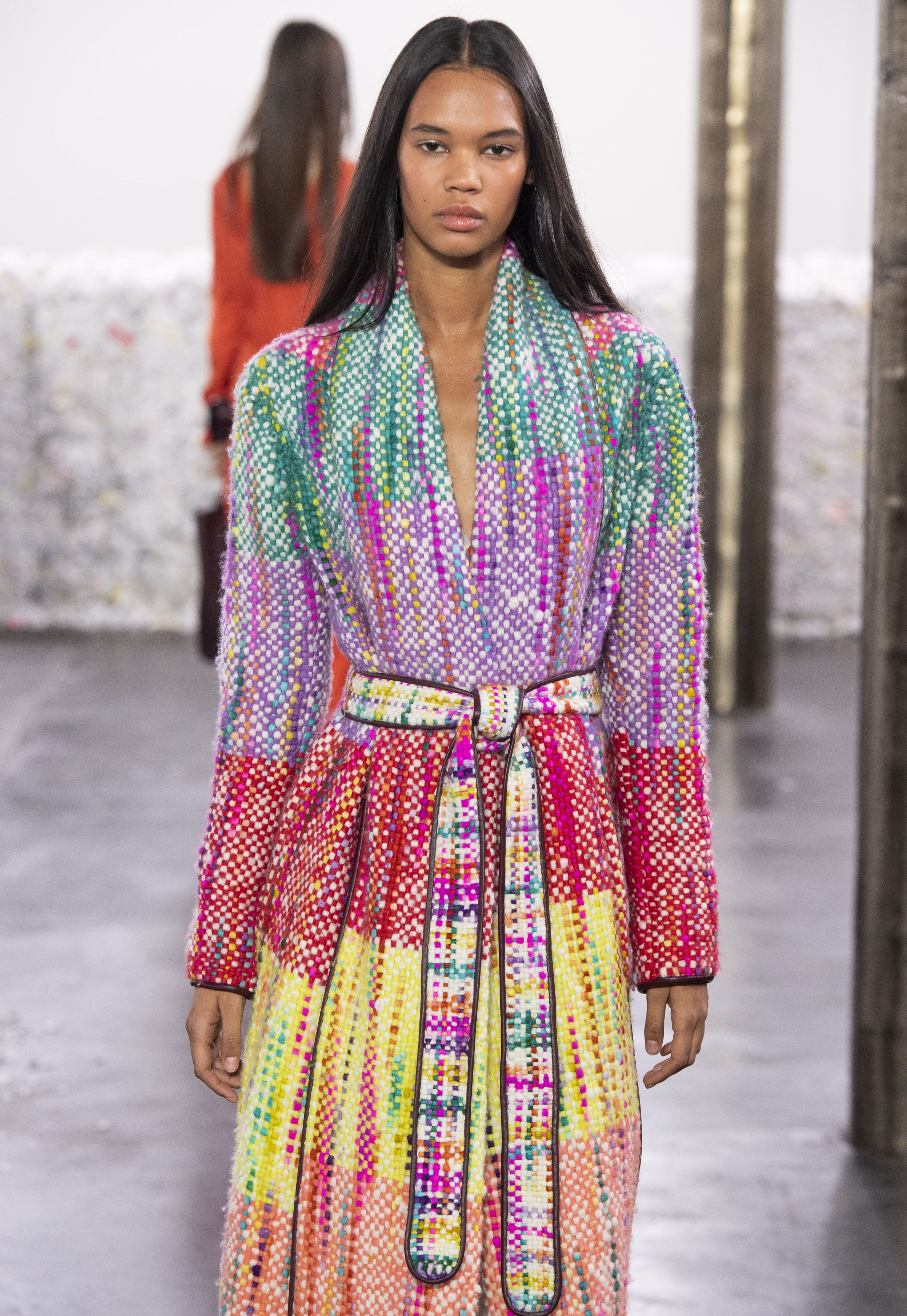
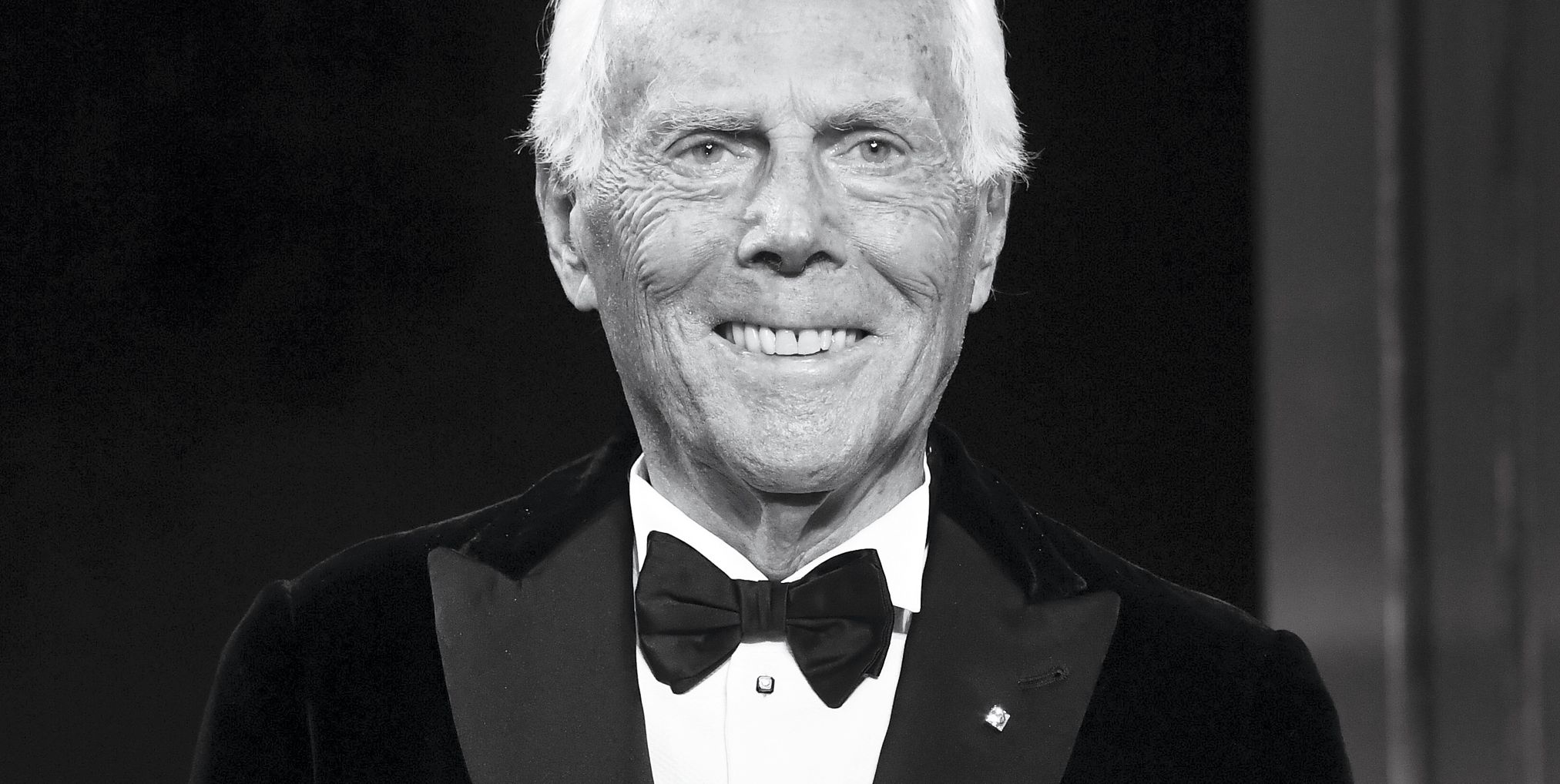
When we spoke over the summer, Ivan Bart, the President of IMG Models & Fashion, was keeping busy celebrating his love of food with his ‘Model and a Meal’, IMG’s Instagram Live series during which he’s interviewed talent like Maria Borges and Alton Mason while cooking. Below as part of ELLE’s look at the future of fashion, Bart talks about how models are using this time to explore new facets of their personalities, how agencies can help elevate and support Black talent, and why he doesn’t think fashion shows will go away permanently.
How is modeling evolving in this time? Are models having to become more creative or develop new skills to adapt?
We’re all trying to learn new skill sets right now. There are new platforms, so for models too, there’s more opportunity. I’ve said this before, but now people’s social platforms are really the magazine of their lives. What you’re communicating is really being looked at. You have the ability to be a publisher, basically, publishing your own content. The fact that shoots had to cease for health reasons, it gave models more of an opportunity to learn new skill sets and be really creative. Elsa Hosk is painting; Grace Mahary has been doing a cooking series, The Impeccable Taste. And Karen Elson has been doing [her song series] Radio Redhead; I live for it.
We’re seeing virtual modes of showing spring up for Fashion Week. How do you envision shows changing in this time, and how will that affect models and agencies?
There are interesting opportunities for our models as avatars, and maybe utilizing them too as live models in virtual spaces. The interesting thing about being in fashion, I always think, is everything happens at the last minute. Suddenly a new face appears and it’s elevated, or a new conversation and a new way of doing things. I think we’re just in this very exciting, charged time, to live in the possibilities.
And then to speak about the digitalization of fashion shows: We all knew it was moving here and knew that people are being diverted to the digital space and reading more online. What happened with COVID is that it just accelerated the movement to the 21st century. It’s almost silly, in a way, that we’re trying to figure it out when the world was telling us, this should’ve been a plan in any case. The way we were doing things, with regular shows and live events. We now know that it’s not 100 percent – you’ve got to have a backup plan, and everybody knew that the digital space was coming. But that being said, I think this is the moment in time that people are conversing and talking and doing and figuring it out. And there are several possibilities. There are socially distanced opportunities for seeing fashion. And again, there’s digital opportunity. And there’s also photo shoots. Instead of doing a live event, it’s about doing something that people can consume. This is a wonderful time for the consumer, because the consumer is dictating exactly what they want from brands. That gives an opportunity for collections to be happening all through the year, too. But I do think – and I’m going to say, also, on the side of fashion events and fashion shows – you know what, it’s exciting. “The show’s about to start!” We all want to get back there. Everybody does. The idea of the live event and the excitement of seeing live models, walking in the clothes, seeing how the clothes actually move….that’s not going to go away.
What can the modeling agencies do to push for diversity and inclusion and to help models who are already in the industry?
I think the key is visibility. The key is to sign Black talent. The key is to elevate Black managers and creatives in the industry, because it’s not just the talent themselves, but it’s the people behind the camera. When a model is on set, I think it’s important for them to see people with shared experiences, to see themselves. That’s a big part of a narrative that I’ve been trying to say for many, many years now. It says it on my Instagram [bio], which by the way has been there since the day I started Instagram, “Through fashion imagery we can effect social change.” If you’re not seen in a campaign; if you’re not seen on the runway, you’re not seen. Our part is to sign Black talent, visibility, and absolutely focus on equity in pay. In the meantime, I want to wrap my arms around the industry and help foster any conversation, and again, enlist Black creatives themselves. I want to hear their stories.
This is a moment that – my job is to shut up [laughs.] That’s my job, actually. We should amplify and help support, the Black creatives in the industry. That’s an actionable thing we can do.
There have been a few open letters talking about how we can use this moment to transform the industry, to address the questions of sustainability that we’ve already been talking about for years, and to make the industry more sustainable from a human perspective. Do you think the need for change has become more urgent, and how will this propel things forward?
Sustainability is urgent. I mean, we were given notice that, what, we had 12 years. And also, climate change is a racial issue. It’s going to affect people around the world. And so we need to figure out ways in terms of how we consume clothes and how we design clothes. Amber Valletta is far better at discussing this than I am; I’m learning. Especially with what’s going on in the world right now, I’m learning. This is a wonderful moment to sit back and listen. And I really do believe that time is of the essence for a lot of things. There is a great sense of urgency where the environment is concerned. I am very well aware of the ticking clock and that we have to do our part as an industry to help roll back the clock.
When you’re home, you become introspective, you look inward – you look at the things that matter the most. The fact that we’re spending so much more time with our families, and we’re really focusing on what matters most to us and what is most important, I think, has also accelerated what people really want. It’s really pushed consumers, what they want in a brand and what they’re looking for. And I think most people now are looking to live peacefully, harmoniously, and in order to do so, we have to use things that are environmentally friendly, and things that also promote equality and humanity.
Are there industry-standard ways of doing that we need to leave behind post-COVID, if we can imagine a post-COVID world?
I’ll tell you one thing that I would like to let go of and that is, kissing, and handshaking [at shows.] I’m done with that, and I’m into bowing. I want to make bowing cool. I would like everybody to accept the fact from here on in, we’re going to socially distantly greet each other in a very beautiful manner.
This interview has been edited and condensed for clarity.
This content is created and maintained by a third party, and imported onto this page to help users provide their email addresses. You may be able to find more information about this and similar content at piano.io
“I learned pretty early on that press doesn’t pay the bills,” says Harlem’s Fashion Row founder and CEO Brandice Daniel. “I knew I needed to do something that would actually give financial opportunities to designers of color.” Daniel founded the initiative in 2007 to create an equal playing field for Black and Latinx designers, staging fashion shows and providing networking and mentorship opportunities. “We’ve been doing the work for 13 years,” says Daniel, who launched the Icon360 fund under the HFR umbrella this past May to benefit designers impacted by COVID-19. When ELLE spoke to her early in the summer, she was thrilled to have just raised $15,000 through a virtual fundraiser, featuring panelists like Christopher John Rogers. In June, the Council of Fashion Designers of America (CFDA) added another $1 million to that tally through its Common Thread Fund.
“We’ve been doing the work for 13 years.» -Brandice Daniel, Harlem’s Fashion Row
Under Daniel’s leadership, some of the industry’s most shameful statistics have come to light—including that, per HFR, less than 1 percent of designers sold in major retail stores are people of color. It’s a figure that Brother Vellies founder and creative director Aurora James was all too aware of when she devised the 15 Percent Pledge. “I was talking with a friend about the struggles Black-owned businesses are having during the pandemic,”she says. “At least 40 percent of them will not survive. That both tore me up and inspired me.” To date, Sephora, Rent the Runway, and West Elm are among those to have signed on to the pledge, which urges major retailers to allocate 15 percent of their shelf space to Black-owned businesses (nearly the same percentage of the U.S. population that Black people represent).
Brother Vellies
Other industry heavy hitters have opened their wallets to ensure that up-and-coming fashion students of color get the support they need. For example, Gucci partnered with the CFDA to provide $20,000-per-year four-year scholarships and mentorships to two students: California native Ajai Kasim, who is headed to Parsons School of Design; and Kaya Ugorji of Washington, DC, who will attend theFashion Institute of Technology.
Reflecting on the state of affairs in the industry and beyond, fashion activist and former model Bethann Hardison looked back to the ’70s, when she began her career. “I started out in the garment district,”she says.“There was no talk of race, only whether or not you could do the work.” A turning point for her was when Bernadine Morris, then fashion editor of the New York Times, devoted a major feature to Hardison and other Black models: “We were so proud, and then Newsweek followed up with a story about how successful so many Black models had become.” While there is ample room for progress, she says, it’s important to reflect on those who paved the way.“I think you have a calling, and you just call things out along the way, but you don’t necessarily start doing that until it’s time. Well, we have a movement now, and we’ve all got to keep up with the movement.”d
This article appears in the September 2020 issue of ELLE.
This content is created and maintained by a third party, and imported onto this page to help users provide their email addresses. You may be able to find more information about this and similar content at piano.io
Shortly before fears of COVID-19 swept through this spring’s Fashion Week, fashion show production maestro Alexandre de Betak was already reexamining his business model. Famous for his transporting work for the likes of Dior, Rodarte, and Jacquemus, de Betak released a statement declaring that shows must be smaller, more sustainable, and more digital. The pandemic only sped up those mandates. “Due to environmental concerns, my current focus is on testing new digital platforms,” de Betak says.“But by next year, we’ll be pretty happy to have experiences again, albeit more intimate [ones].”
Alexandre de Betak
John PhillipsGetty Images
The question of what those reimagined shows will look like is one that has been bedeviling the entire industry—and has accelerated existing conversations about changing the fashion show system. Between the carbon footprint of international travel, elaborate single-use sets, and a calendar many designers feel doesn’t make sense, the status quo could use some improvement. In Milan, Gucci’s Alessandro Michele has announced that he is permanently abandoning the traditional schedule, while in New York, Michael Kors, Tom Ford, and Ralph Lauren have bowed out of showing during the regular NYFW schedule. (Paris Fashion Week is, by and large, going ahead as planned as of press time.) Some of the most innovative ideas are emerging from younger talents who are keen to embrace new technologies and less tied to the idea of a traditional show. Anifa Mvuemba held her recent show for her line, Hanifa, virtually via Instagram Live: The garments appeared in 3-D, moving across the screens of tens of thousands of viewers, as if worn by invisible models. And instead of holding a show in the fall, Pyer Moss’s Kerby Jean-Raymond will screen a documentary, American, Also, at a drive-in theater.
Others feel that fashion shows as we know them are, in the long run, here to stay—albeit with some changes. Giorgio Armani was one of the first to spring into action in February, eschewing physical guests at his show and quickly switching to a digital format.“I believe that there will always be a place for a performative approach to fashion, where you show your work to the world. What form that takes, ultimately, is the question here,” the designer says. “Going fully virtual is not a good solution, I think…. What I am sure of is the need to do less and to do it better. In the future, I believe that brands will think carefully about staging lavish events unless there is a genuine reason for doing so.”
This content is created and maintained by a third party, and imported onto this page to help users provide their email addresses. You may be able to find more information about this and similar content at piano.io
When so many “fashion people” speak in tentative, pre-digested sound bites, Virgil Abloh’s candor and refusal to go along with conventional wisdom is refreshing. For ELLE’s look at the future of fashion, the Off-White founder and artistic director of menswear at Louis Vuitton talks about how creativity is like a sprint, why brunch is the ultimate fashion show, and why the intern is always the smartest person in the room.
The conversation around fashion pre-COVID was already pretty focused on how we can make the industry more sustainable, environmentally and in terms of pace. I know you took time off for a period last year, and you’ve talked about the frantic pace of the industry. Do you think the current crisis has accelerated those conversations? Do you think it is going to push the industry in a more sustainable direction, ultimately?
If I explain everything through my optimistic mind: You snap your fingers, and all of a sudden, the industry is cut in half. That’s sort of my shorthand rule. If we cut everything in half, the size of the collection, the length of the fashion week, the amount of designers showing, the scale of the fashion shows, the size of the collection, then it seems like it would renovate the feeling in the industry of: opulent, and too much, and so much stuff going on sale and not having enough time on the schedule, with so many collections driven by marketing and numbers, rather than designers and creativity.
If you ask about my pessimistic mind, because I bounce between both: People are going to do exactly what they were doing January 1st. As optimistic as you want to be, human nature has this resilience to what it wants to do. That’s how we got here in the first place. The glorious days of fashion got us to where we are at, because people were like, ‘Hey, I want couture! I want luxury! I want expensive things.’ But I don’t think you can have this discussion without thinking about the real world. That’s what I based my fashion career on. The everyday person who can’t afford to spend $60 for a T-shirt. That’s also the fashion industry.
Abloh backstage with Gigi Hadid before the Off-White fall 2020 show.
Richard BordGetty Images
You are frequently called a disruptor. Do you think the industry is particularly in need of disruption right now? Is it going to need to be disrupted in order to thrive?
Yeah, I do. The main point that I stand for, besides my own disruptive ideas, is letting the young kids into the system. It’s not me saying, ‘Hey, I want to turn everything upside down for the sake of turning everything upside down.’ I just say that my career, thankfully, has given me the opportunity as a younger designer to go into older systems and say ‘Hey why don’t we do this this way?’ Or ‘Why don’t we not do that at all?’ or ‘Why don’t we relate to the people, the real people as well as our target consumer?’
The traction that we’ve been able to have in the businesses and companies that I work with, both Off-White and Louis Vuitton, comes from me simply being a younger perspective given a chance in a system that’s much older than I am. I come from a different generation, so of course I let my ideas come from my generation, and we have a dialogue and we’re able to put those into play. The ecosystem of fashion is trying to predict what’s going to be next. Meanwhile, the younger generation has the exact answer. It’s always the intern in the office who has the good ideas.
How are the current limitations kind of forcing people to be more creative right now? Have you found creative ways to reimagine the way that you do things?
I think it’s given me more perspective. I can’t say I’m more creative than normal. If you’re running a sprint without anyone else on the track, your time is going to be most likely slower, because you’re not seeing how far on or far off or on the pace you are and you don’t know if someone’s beating you or not. And I think creativity, especially in a fashion ecosystem, is like that. Since we’re at a standstill, we don’t know who’s changing the ecosystem. It’s kind of like the race has been paused. And that’s where I think it’s valuable. So I haven’t been extra creative, I’ve probably just been more thoughtful. I’m thinking a lot about everything, which is almost a gift that we all got because we step off the treadmills for a second and stop to think and be bored.
So much of creativity does come out of boredom or limitations and trying to work with what you have. Since we’re all reflecting in this time, what have you learned over the last few months that you feel is going to influence your work or is going to influence the industry going forward? Do you think there’s going to be a renewed appreciation for things like craft or quality? You’ve talked about vintage becoming the new streetwear.
Well, I think it’s going to be much harder. The buying public, there’s already a level of desire that’s required. People like fancy things! That hasn’t gone away since the dawn of time, but one thing that I think is resonating is this feeling of humanity, and that’s what I’ve always tapped into, more so than fashion itself, more so than the desire. How can creativity make a feedback loop with humanity? And that’s where I think that the future will see bright revelations and new ideas, if it can go in that direction.
Gigi Hadid walks Off-White’s fall 2020 show.
Victor VIRGILEGetty Images
There have been conversations about changing the way that seasons work and fashion weeks work. Dries Van Noten and many other people in the industry put out an open letter about how things need to change. How do you think shows and fashion weeks in general could change? What do you envision taking their place?
Yeah, I’ve been a part of those conversations as well. What I think is that they ultimately sit on one side of the fence. There’s two different paths: there’s fashion, the creative side, then there’s the economics of fashion, and obviously they relate to each other. From the business side, we’re carrying too much weight of the fashion weeks and the discounting and when clothes are marked down and the relation between independent stores and bigger stores. I think this is a great moment for those conversations to be had so that it can be more refined. Everyone is echoing the same sentiment.
So I quite agree with all of that, with that sort of refinement. When I put my creative hat on, I completely don’t care. There’s an inherent pace, no matter when the fashion week is and that’s my personal responsibility, to be inspired at all times and to work at the pace of the race. This was a dream of mine. It would be the equivalent of being like, ‘I want to be in the Olympics, but I don’t want to train every day.’ I go manic with the pace. Not only am I doing fashion, I’m just excited by life. I’m that type of person. My mentors and idols, like Karl Lagerfeld, when you say his name, what you mean is excellence. Or Steve Jobs, or Michael Jordan. That’s a different class of creativity. It’s not just doing it for the love of it, it’s doing it to sort of make a new canon. I definitely grew up with those inspirations, so I’m not one to say that the fashion schedule is too fast or it’s not like the old days, et cetera, et cetera.
This period in history is being compared to the 2008 financial crisis in some ways. Do you think there are any similarities? Did you take away any lessons from that time about how to deal with challenges? It’s interesting, a lot of designers that I cover actually started their careers around the time of the financial crisis at a time when people said it was the worst idea to launch a business, and they managed to do it against the conventional wisdom.
I think that speaks to human resilience. Things don’t go right down to zero, you know? A year ago everyone was sort of unanimous in believing that like diversity, inclusiveness, sustainability were all targets for the whole world in general, not just fashion, but fashion included, and the beauty of that is when it gets seen through. That gets seen through by letting the world be a free world. Letting people give different opinions, people from different economic classes, different groups all have an equal opportunity to play on the same field and that to me is the premium goal of our industry.
The scene at Off-White’s fall 2020 show.
Victor VIRGILEGetty Images
What do you want to take away from this moment and what do you want to leave behind?
For me, I want to be more thoughtful. I consider myself very lucky, because I’ve been able to, over the past five, six, seven years, lay a foundation in my career. People have seen the ideas evolve. I started out from a printed T-shirt and now to Hailey Bieber’s wedding dress. That A to Z is ultimately phase 1. In my mind, I haven’t done any work yet, I’ve just sort of made a case for why my point of view is valid. What I’m into now is making my voice mean something, making my voice speak to a larger creative community at hand and through action, not press releases, make something that is more heartfelt and speaks to the community and people and humanity frankly through my outlet of fashion, music, art and design.
Comfort was already accelerating, with athleisure and the fashion sweatsuit, but has now has really become a huge part of everyone’s lives. Do you think people will emerge from this and want to get more outfitted, head to toe, becoming more maximalist or, do you think they will take from this that you don’t necessarily need to dress in business casual to look professional? I’ve now seen everyone I work with wearing sweatshirts on Zoom and it doesn’t make me take them less seriously or think they are unprofessional, so, it makes you wonder: Why did we invest so much into looking a certain way? Will this pull people further in the comfort direction or will there be a reset?
I’ve been stuck on one central point, which is restaurants and bars, and to me, fashion is driven by going to brunch with your friends and seeing something you’ve never seen before. The highest ranking system is ‘Hey, where did you get that from?’ That’s an emotional transfer: ‘Yeah, my friends think my style is cool.’ That, to me, is the root of modern-day fashion equity trading. This pandemic and where we are at with social distancing sort of obliterated that landscape, the brunch, the friends, the hang —that drives fashion, frankly, more than the work you and I do in a way. Writing about fashion, me making something on a runway, it’s neck and neck with how someone finds out about a new trend and they want to go to the store and find that exact thing or something like it.
I know. I miss seeing people on the subway. I’m always paying attention to what people are wearing and I’m definitely the person who asks ‘Can I take a picture of this sneaker and sock combo?’ and people think I’m insane, but just vibing off what people are wearing, all these different types of people, that’s harder to do now.
Part of me thinks ‘Yeah, people are liking sweatpants and all that,’ but as soon as they see someone wearing high heels and a cool leather skirt, their brain is immediately going to want to get dressed up. That’s human nature and how trends pass from one another. The way that trends will evolve once it hits the mainstream may be different than what we perceive we’re going to get.
This interview has been edited and condensed for clarity.
This content is created and maintained by a third party, and imported onto this page to help users provide their email addresses. You may be able to find more information about this and similar content at piano.io
When we caught up with Gabriela Hearst this summer, the sustainability champion remained optimistic about the future of the industry. Hearst, who was just awarded Womenswear Designer of the Year by the CFDA, also wanted to set the record straight about the misconception that being green means spending more. She spoke to ELLE as part of our look at the future of fashion:
Do you feel that the current economic climate will help or hinder the sustainability movement?
I actually view COVID-19 as an accelerator for these issues. The sort of hedonistic luxury that was already feeling old before is totally dead now. I think and hope that people will now opt more for craft and quality.
It’s very complex and there are so many layers but if you look at the two main carbon emitters of greenhouse gasses, 1/4 is raw materials and another 1/4 is transportation. Obviously transportation has been slower these days so we’ve been paying a lot of attention to materials. There’s this misconception that we’re living with this endless cornucopia of resources. That’s of course untrue. This virus is of course incredibly dangerous but unlike the climate crisis, it does not threaten our existence as a species.
What have you been working on lately?
I’ve been so focused on ensuring that we take the least amount from this planet, while maintaining our quality and craftsmanship. Starting in 2017, we used only reclaimed items in our show and have since introduced compostable packaging. Most recently, for spring 2020, we introduced a project called the Garment Journey, which is a QR code label that takes you to our website to explain the fabric choices. For example, we chose hemp for one garment because it uses less water and is pesticide free. We selected a specific mill because it uses renewable energy and has all of the certifications that we need in order to have peace of mind.
A model walks among reclaimed fabric at Hearst’s fall 2020 show
Victor VIRGILEGetty Images
Your goal is to ultimately use only dead stock and reclaimed fabrics. Is it challenge to find materials of high enough quality?
It’s an incredible challenge. You basically have to go hunting and gathering, talking to mills, and purchase everything upfront, calculating what you can design from it, how much you can sell. And if the fabric is recycled, you have to make sure it’s mechanically, not chemically, done. Our goal this year for the resort collection is to be at least 50% dead stock fabric. I want us to be the luxury trashcan, where we can get the most beautiful, precious materials and transform them into something extraordinary.
So you’re saying that the movement is now more vital than ever?
Post-COVID, we’re all [going to be] using less, spending less. We’re going to want to have things that are made to last. I think the new paradigm is that if you’re a person or a company and you’re in a position to help, you must help. Being sustainable is essential. It’s not a choice. And I think that what sometimes is stopping many people, and certainly large corporations, is the notion that they must be perfect because they will be judged. People are so quick to point out the errors of others rather than celebrating their efforts. I’ve made tons of mistakes along the way. The important thing is that one tries.
There’s a misconception that being environmentally friendly is more costly, but it’s not. It’s a matter of waste. The less wasteful you are, the more economical it is for your company. I was just reviewing our shipping and it was extremely high, so we’re now opting to ship by boat over planes.
Gabriela Hearst fall 2020.
Victor VIRGILEGetty Images
How are you approaching next season?
I’m always very skeptical when things move too fast. I’d already purchased the fabric as it’s dead stock and we’ve managed to nearly keep our team intact with no pay cuts, of which I am extremely proud.
One incredibly beautiful thing that happened as a result of the pandemic was when I received the first round of next season’s samples from our Italian suppliers. They were obviously hit very hard and the garments were so perfect; they’d taken so much care. I’d intended for the stitching to be intentionally disheveled but they’d poured so much love into their work, I didn’t have the heart to have them redone.
There’s something so terrifying about not knowing whether you’re going to be able to return to the work that you love. We were able to produce this collection remotely. Now it’s on to part B, which will answer the question of how we show it to the world.
[Editor’s note: In July, Hearst announced she would be presenting her spring 2021 collection on Paris. “When we started to assess with the team what the best course of action was to navigate the changing landscape as a result of the pandemic, we realized that for many reasons it became increasingly clear that we will have to present in Paris from an environmental perspective and from a logistics and transportation perspective,” Hearst said in a statement.]
This interview has been edited and condensed for clarity.
This content is created and maintained by a third party, and imported onto this page to help users provide their email addresses. You may be able to find more information about this and similar content at piano.io
After months of lockdown, Milan had recently re-opened, with workers flooding back to offices, and Donatella Versace was happy to be back in the office (though she had picked up some Zoom skills in quarantine.) Below, as part of ELLE’s look at the future of fashion, the designer speaks about how this moment is making her push even harder for sustainability; the drawbacks of digital shows, and why she thinks smaller, seasonless collections are the future of fashion. (In July, after this interview took place, she put this into practice by showing Versace Flash, a co-ed capsule collection.)
How do you envision fashion transforming in this difficult time? How can we use this moment to change it for the better?
I’ve had a lot of time to think about this, and my first answer is: Nothing’s ever going to be the same. These past three months I’ve been thinking, thinking, thinking – we have really had time to think about our jobs and about fashion. How can we make fashion different and more in touch with life, with the new normal, which is completely different than before?
We started the sustainability discussion before COVID. But for example, for me, going out in Milan the first day, I felt the air was much more clean. I saw the sky was finally blue. In years and years, I had never seen Milan so clear. There were no cars. No people around. I don’t think I was the only person who saw that. So sustainability is what I’m going to concentrate on most. I think we are going to be out of place, showing things that are not sustainable. Now, not 100 percent of fashion can be sustainable. It isn’t possible to do 100 percent. Also, the most sustainable things are very, very expensive. We have a large range of customers, and we have to think of a young customer with not much money. But we are working on this. I have a big team working on this and giving me answers. And again, I want to underline that I have been working diligently on this topic for a few years. And now, step by step, we will get to a point when the environmental impact of fashion will be drastically reduced. So, this is my goal.
Virtual images of Donatella Versace onscreen at her fall 2020 show.
Jacopo RauleGetty Images
I’m convinced that nothing is going to be the same ever again. So fashion, finally, is going to change. It’s going to have different rules, if we can call those rules. Because, I mean, it was getting too predictable. We had Fashion Week in September; men’s fashion week in June, and it never changed for years and years. When something never changes, it’s not relevant anymore, and the most important thing is to keep fashion relevant. How to do that is another discussion.
Another thing I want to concentrate on is a seasonless collection. Something very light when it’s snowing outside; it’s ridiculous. This kind of delivery – the wrong season in the wrong season – needs to stop. You need to be free to, if it’s a beautiful spring day, go into the store and find something for spring, not find a coat. Or a fur, though we don’t use fur anymore. That’s the immediate reaction to fashion: ‘I want to wear it now.’
Going back to what you said about the pace of the industry for a second, there have been a couple of open letters and manifestos: Alessandro Michele wrote about this, Dries van Noten published an open letter that was signed by many different designers, as I’m sure you saw, and they were talking about these questions of changing the pace of fashion, changing the way the seasons work to avoid, like you said, the bathing suit-in-December problem. Do you think that’s something the rest of the fashion industry will get behind?
All of the designers realized what we want, but we couldn’t ask for it because the industry behind us wouldn’t follow us: Seasonless, smaller collections, more often. Instead of doing a fashion show where you show 70 or 80 looks, I’d like to do 30 looks for men and women and do them more often. When I have the right idea, to be able to construct a small collection around this idea, and then in two to three months you do more looks. We should be more free to create in the moment we have the idea.
This content is imported from Instagram. You may be able to find the same content in another format, or you may be able to find more information, at their web site.
Right, and I think that people are reconsidering right now, how much they’ve consumed in the past, and taking stock of what they have, wanting to invest in quality.
Absolutely. I think use-and-throw-away fashion, it’s finished. I think people who are investing money in fashion, they want something that can stay in their wardrobe and wear season after season, and be relevant, always. So quality is so important. If you really want to call yourself a luxury brand, a luxury brand is quality. Other luxury brands have used cheap fabrics for cost reasons and cheap ways to sew the clothes, and declared, ‘This is a luxury brand.’ No, that’s not possible anymore. If you are a luxury brand, you do luxury clothes. That doesn’t mean luxury has to be very, very expensive. You can work around that. You cannot wear an outfit for [just] one or two seasons – it needs to live in your wardrobe.
Looks from the fall 2020 show.
Victor VIRGILEGetty Images
Italy has an unbelievable tradition of quality and artisanship; the most beautiful things I own were all made in Italy! I’m really hoping that, with everything the country has gone through, that you’re able to continue that tradition.
The ateliers that we use for production, they all were in trouble with the pandemic, and a lot of them were very small, with only 10 or 15 people working there. So we took care of this, in order to help give them more business, so that they did not die. Because if this small craftsmanship business dies, fashion is dead. Fashion has a meaning in society. Fashion helps a man or a woman to feel better, to feel stronger, and to feel relevant in some way. Not because you are well-dressed, but because you are a relevant person: your attitude, your intelligence, the way you explain yourself. We were very careful to help so that these small businesses don’t die – so that Italian craftsmanship doesn’t die.
The conversation about diversity and inclusion in fashion has only become more urgent in this moment. What does the industry need to be doing to address that?
We need to be inclusive, we need to be courageous, and we need to give a chance to different people to come in, learn, and express themselves. There are a lot of talented people that deserve a voice, to be seen, and given a chance.
Do you think digital shows will replace in-person shows, or do you feel that those are irreplaceable?
The emotion of a fashion show cannot be replaced digitally. That’s for sure. I don’t think you can “visit” emotion from your laptop; that’s impossible.
A look from the Fall 2020 show.
Jacopo RauleGetty Images
I was there for the supermodel moment that you did in 2017. That was something where, if you were in that room, it was unlike anything else, as opposed to seeing it on a screen. So I don’t think that’s going away. I have been interested in how people are finding workarounds now, but I do think we’ll probably go back to the traditional show. Are there different ways of doing things that you have been adopting?
I will go back to a traditional show, I think, but I’m going to put a little bit more technology into it. It will be a mix. During this lockdown, if it weren’t for technology, we wouldn’t have seen each other. I never thought we were going to work so much from home via technology, Zoom discussions. But I did it; you adapt yourself. But when we opened the office and saw each other again, it was a totally different emotion. You need to be able to touch the fabric, to see the outfit on a real person to understand what you’re doing. So, yes [to] digital, but not completely.
Campaigns are completely changing as well, with Zoom campaigns or even avatars as models. Is that something that you think will become more common, or again, do you think that’s just of this time?
Maybe people will do more of this, but that’s not the main thing. You cannot show your clothes on Zoom. I don’t believe that. You need your team, a studio, and a photographer. It has to be a combination of week in the digital world and the real world. People are real, also, digitally. [laughs] But I want to feel people around me.
This interview has been edited and condensed for clarity.
This content is created and maintained by a third party, and imported onto this page to help users provide their email addresses. You may be able to find more information about this and similar content at piano.io
Since starting her brand Brother Vellies in 2013, Aurora James has always sought to help right the industry’s wrongs—from utilizing recycled materials to ensuring fair wages. This spring, James started a bona fide movement when she created the 15 Percent Pledge, which asks retailers to devote 15 percent of their shelf space to Black-owned businesses. (Sephora and West Elm are some of the businesses that have already signed on.) Here, as part of ELLE’s look at the future of fashion, the designer explains how the initiative came about.
To industry outsiders, the 15 Percent Pledge seems like such a brilliantly simple concept, something that all retailers should easily be able to adopt. When did the idea first come to you and what have been the responses or concerns of retailers? What role can consumers play in pushing this movement along?
I was on the phone with a friend talking about the struggles Black-owned businesses are having during the pandemic. Statistics are showing that Black-owned businesses have been hurting more than any other racial group, at least 40 percent of Black businesses will not survive. As a business owner, and a Black person, I was especially torn up by this information and it inspired me to launch the 15 Percent Pledge. What started out as an Instagram post is now, just three months late, a fully functioning 501(c)(3) that urges major retailers to allocate 15% of their shelf space to Black-owned businesses. We’ve had tremendous success from retailers such as Sephora and Rent the Runway, who have already committed to the Pledge, and we are having inspiring conversations with many others so that we can work with them to create clear strategies and attainable goals that will result in a commitment.
Consumers can actively choose to spend their money with Black-owned brands in order to help them thrive. We encourage our community to buy from, and be loyal to, brands that align with their values.
We also hope that the community will continue to stand with us and support the Pledge by sharing our posts across social channels and sign our petition.
This content is imported from Instagram. You may be able to find the same content in another format, or you may be able to find more information, at their web site.
As an independent label, what have been some of your biggest struggles and triumphs with retail partners in expanding the reach of your own brand?
I believe that historically, Black women have had to work twice as hard to get half as many opportunities.
One of the things about the Pledge that’s so great is that it extends beyond the fashion world. So often when discussing retail we get hung up on fashion, but this has the potential to enhance so much more. What feedback are you hearing from people in other industries?
Exactly, this goes a lot deeper than just the fashion industry. However, we have received encouraging feedback from brands in various industries, and we’ve been learning how we can apply the 15 Percent Pledge to each of their business models. We work very closely with those brands that make the commitment to the Pledge and create a tailored strategy that will allow them to hit the 15% mark.
West Elm was one of the first businesses to sign the pledge.
West Elm
Your brand has been sustainable from the beginning. Given the challenges to the industry as a result of the pandemic, do you think that the sustainability movement, which had been gathering steam, will be helped or hindered?
We can think of sustainability in different ways. Right after the tragic killing of George Floyd and Breonna Taylor, we saw a lot of brands and influencers from across industries posting messages of solidarity, but not actually changing anything about their business. They say they stand with the Black Lives Matter movement but don’t have diversity in their boardrooms or in the content they put out. I hope that as an industry, we continue to evaluate what business as usual looks like and start thinking more about our supply chain, how we are actually treating the people we work with, and what imagery we are putting out there to inspire people to shop because often times, a lot of it has been rooted in trying to make women feel less than and I think we should try to focus instead on having women feel like the best versions of themselves.
Are you optimistic about the industry’s future? How have you been able to maintain that, and your creativity, through these difficult times? So many of the designers I’ve spoken to have decided to press pause, but certainly not everyone has the luxury of doing that.
I am optimistic about the industry’s future. I have to be if I’m going to stay in this business. As the pandemic was growing, we started thinking about what the Brother Vellies community needed at a time when they couldn’t even leave their homes. We worked on creating small-batch items that we hoped would bring beauty and comfort into the lives of our community–and this grew to become Something Special. By signing up to the program, our Something Special community members receive a little surprise every month. We started with the At Home Mug, which I use every morning to slow-stir my coffee and is handmade by our artisans in Oaxaca, then we sent a beautiful handmade hanging vase, which was followed by a thoughtfully designed bowl to burn the sweetgrass that came with it. We also are so excited about the Cloud Socks that are so incredibly comfortable that I am living in them day and night. If you’re not going to leave your home, you may as well as have the best comforts surround you.
This interview has been edited and condensed for clarity.
This content is created and maintained by a third party, and imported onto this page to help users provide their email addresses. You may be able to find more information about this and similar content at piano.io
When I spoke with model and Pose star Indya Moore back in May, they were quarantining in, in their words, “a regular-ass home in Chicago,” where they had already begun doing at-home shoots. Below as part of ELLE’s look at the future of fashion, they reflect on the ups and downs of working from home as a model, the way respectability politics intersect with the industry, and the fashion world’s shameful record when it comes to representing Black trans people like themselves.
How is the modeling industry changing right now?
It’s definitely changed. So far I’ve completed two quarantine shoots at home. I took the photos myself. It was a combination of me taking selfies, creating makeshift camera stands out of laundry bins and chairs and Styrofoam. One of the challenges that I have been facing has been having to be the photographer, the model, the makeup artist, the lighting person. I don’t know shit about lighting, and I learned a whole lot during these shoots.
Has that been fun? It sounds like you’ve been adjusting, but liking it?
I mean, it can be really fun. There are moments where it can be really exhilarating, especially if I’m getting great pictures out of the work that I’m doing. I appreciate being challenged in this way and being able to get really creative and hands-on. It’s also frustrating because my partner and I are quarantined here in his home and my partner is supporting some friends right now who are staying here, too. I’m not in a mansion, a high-class condo or any of these things that a lot of public figures who are shooting are probably in. I’ve been challenged by that and thinking about respectability politics in the industry and how I feel vulnerable to that critique.
Moore opened Jason Wu’s spring 2021 show on September 13, 2020.
Mike CoppolaGetty Images
I think that’s probably been a challenge for a lot of creative people, because your living space has never been so much of a class signifier.
Exactly, and I think it’s a conversation worth having. All of this information, my personal life, everything that I’m going through is starting to suddenly be so visible. The entire world is now having an opportunity to see my living space and situation. I’ve also been afraid of saying no to something because whatever my fears may be about my privacy, these are relationships with brands that I want to keep.
I know a lot of folks are seeing people taking photos of their mansions, and faces that they can’t particularly relate to right now, and so I just feel good being able to give people an opportunity to connect with me in a really personal way. I’m living right now in a regular-ass home in Chicago and that’s something I’m really proud of.
Do you feel like you’re portraying yourself differently when it’s you doing the creative direction, as opposed to the way that a photographer or stylist would see you or mold you?
Definitely. [On sets] I feel like a doll. I’m the figment of everyone else’s vision and imagination. People are using my body and my essence and my likeness to bring together the story that they want to tell. The story that I tell is often through my movement and the interview that I give. I don’t really have much autonomy in these shoots, and that’s what the nature of these shoots are. They call you, they hire you to sell a product and you make it work with your movement, but I think here it’s a little different. It’s already more personal, it’s already more me, it’s already different than I was portrayed. I feel more comfortable not wearing makeup. I’ve never not worn makeup for a shoot and I don’t give a shit about wearing makeup right now. I feel comfortable just being my raw self. I’m always trying to retain as much of myself as possible in shoots, even though I have very little creative autonomy.
I think a part of this experience in quarantine is, it almost made me feel like I want to hide. I feel stuck and trapped and enclosed. I feel like I can’t reach my loved ones in a way that I would like to reach them, but I also feel so vulnerable. I’ve never felt this vulnerable outside of shooting Pose because it’s so reflective of my actual history. I’ve offered up and volunteered my privacy so that folks can feel more connected and more grounded being home. But I also feel like doing that kind of makes me feel like I want to hide.
Moore attends ELLE’s Women in Hollywood event in 2019.
Jon KopaloffGetty Images
Would you be interested in getting more into photography or styling or creative direction, something behind the camera that you’ve discovered during this time?
I’ve always loved taking pictures, so this was a piece of cake. In that regard, I was really excited to just get behind the camera. I’ve always been into creative direction. It’s really fun to execute something in your mind and I love that challenge. That’s what we do in our everyday lives, we execute shit in our minds, right? We are all the creative directors of our own lives. I also feel like I ain’t thinking about creating shit after this right now. I’m not thinking about, OMG, I can’t wait to come out of here and direct a movie. Where I’m at right now in my heart, is, I’m most inspired to explore what it means to be alone and happy even in the company of others and also what it means to just be and let go of shit. Being in quarantine has definitely brought up a lot of things that I’d put away at the back of my mind. A lot of trauma that I haven’t dealt with has come up. It’s been a really emotional and roller coaster-y time for me. Trying to balance creativity and making things with just wanting to just sit with myself for a moment and go over everything that’s coming up, I think it’s just been a lot. I’m really excited to see what it means to give myself more of that grace to just be okay with not creating for once, not being a creative machine. I just want to be okay with not knowing what’s next and what’s in front of me.
Everyone is always like, ‘It’s all about remaining present.’ I think so much of my life I’ve only been able to be in the present because I didn’t have the luxury of peace to plan my future, to reminisce on the past. I’m either trying to run away from the past and stay in the present as much as possible without thinking about the future, or just living in the past. I’ve learned very quickly that I have to think about the future, working in such a fast-paced industry. Everything about this machine is all about anticipation and thinking about the future. I think a large part of my peace is finding a balance, to be okay with not creating shit and sitting down and fucking smoking weed and playing a video game for once.
Moore backstage at Christian Siriano fall 2020.
Bryan BedderGetty Images
We’ve talked so much about shoots and I do also want to bring up the runway. I know you’ve done some runway shows and I wonder if you have any thoughts on how shows will change from a model’s perspective? Because several of the fashion weeks are going digital or semi-digital.
The black cars and the velvet rope and the security guards keeping folks at a distance—I don’t think any of that will ever change because that’s so much a part of the fashion world. That’s what people all around NYC get up and go to Fashion Week, or sneak into one of the shows. That’s exactly what I did. Trying to find ways to sneak into these shows and bypass security and get a chance to say “hi” to my favorite artists who are coming to NYC for the show. Getting a chance to be visible, to get a cameo in front of those cameras, shooting celebs coming out of the black cars. All of those things are what makes Fashion Week, Fashion Week. I don’t think those will change even though it’s wasteful and stressful as hell.
Fashion always looks for ways to break convention, and often in conventional ways, which is a really interesting dichotomy. I think I’m more interested in wanting fashion to evolve to go past the romanticism of white women and whiteness. I think we need to move forward, and I don’t think white folks really see this happening, but Black and brown folks do. Dark-skinned Black trans women and femmes, and folks who are watching fashion shows and never get the chance to see themselves, know this. It’s often extremely homogenous and if there are POC it’s one or two. Fashion shows seldom reflect what humanity looks like. As a Black trans person who is also deeply in love with fashion and everything that can be done with it, my perspective about how the fashion world can change isn’t leaning so much into, How can it evolve after quarantine to be more creative. I’m not thinking about that. I’m still thinking about the visibility of dark-skinned Black people on runways. I’m still thinking about the visibility of dark-skinned Black trans people on runways. I’m still thinking about the visibility of dark-skinned fat women, or dark-skinned fat LGBT folks and thinking about the bodies that are still missing from these runways, the people that are still not seeing themselves in these places that we apply so much importance and value to. I think marginalized folks will eventually stop investing in things we don’t get to see ourselves in. Why would you invest in someone who doesn’t see you or doesn’t want to see you? The only thing I’m thinking about the evolution of fashion is to include more of my type of people and more of my community. I think the way we can make fashion more interesting is by portraying everybody who participates in fashion.
Yes, including behind the scenes, the people who are working on shoots.
Yes, thank you so much for saying that! Yes, behind the scenes as well. I think there is so much more to be done. I hope that fashion designers and creators are taking the time right now to learn about real folks’ circumstances, real folks’ scenarios that people are going through in our society. I want them to learn about these things so they understand why it’s so important to represent these people on their runways and in their brands. Why it’s so important to hire marginalized people, without necessarily cutting anyone else out of work. I think fashion can change infinitely in so many ways, but I think the one way that it hasn’t changed is in its representation. It’s always one or two Black people. I’m not okay with it and it pisses me off and makes me really sad, not seeing myself on a runway for so many years, not seeing myself in media, not seeing myself anywhere. It messes with your self-worth. It really makes you question your self-worth.
I have to be honest, I’m not excited about the fantasy of fashion. I can’t go on with this fantasy of a white woman. I’m not down with the fantasy if that’s all you can offer me. I’m finished trying to be white. It’s impossible and it needs to stop, and this is the message that is going out to people when we are selling the fantasy of fashion only through white men. It has to change because that is not a fantasy that we all get to live. It’s not a fantasy that we can connect with in real ways anymore. It’s making us hate ourselves.
Moore arrives at Women in Hollywood.
Amy SussmanGetty Images
I was searching image banks looking for conceptual ideas for a story, and when you look up things like ‘imperfect beauty’ it’s a person with a slight tooth gap or freckles, people who fit every conventional beauty norm and don’t really deviate from it but like….they have freckles!
Girl, I need you to quote yourself for this article too, please! Because these are really important things for people to consider and think about. These are actual fragmented parts of our society and we have to change if we want to evolve in beautiful ways and we can’t evolve beautifully if the way we conceive beauty is stifled. When we stifle beauty, we stifle evolving beautifully and that’s never going to change. I used to think my big lips were an imperfection. Even in conversations where we talk about loving ourselves, we’re like, ‘Oh, I love my imperfections.’ Who taught you that your traits are imperfections?
«We can’t evolve beautifully if the way we conceive beauty is stifled.»
I think we have to look at fashion to deconstruct so much of the way we see ourselves because fashion is what we use to be seen. For a lot of young kids, the first dreams we have are stimulated by what we see on TV, on the cover of magazines and in the media that we consume. There’s so much responsibility in that, that the fashion world needs to be accountable to. We don’t need to think about how can we use what we learned in quarantine to further build into this already problematic industry. We don’t need to build further. We already have issues in this industry that needed to be fixed, to be solved, years ago. The one common [way] that this quarantine can benefit us as creators, is to have the space to think about what we are creating. The messages that we are sending. How can we be more accountable to the world around us? How can we move past only being about commercial benefits? We can figure it out and we have nothing but time and opportunity to think about the world that we have been living in and contributing to during the quarantine. I can’t imagine anybody thinking about anything but that.
This interview has been edited and condensed for clarity.
This content is created and maintained by a third party, and imported onto this page to help users provide their email addresses. You may be able to find more information about this and similar content at piano.io
“When it comes to energy, we need to look to the future, and when it comes to garments, into the past,” Gabriela Hearst said at a preview of her fall 2020 collection in February, a month before the world, and the industry, got turned upside down. Eco-pioneers like Hearst and Stella McCartney have been calling on the industry to follow their lead for some time now. But with widespread cost-cutting measures in the wake of COVID-19, it remains to be seen if the industry can maintain its commitment to greener production, and if eco-friendly habits like upcycling, re-sale, and clothing rental will suffer as a result of fears about spreading the virus.
Fashion consultant Robert Burke predicts such innovations aren’t going anywhere. “Younger generations,”he says,“are looking for sustainability, non-mass-produced goods, and uniqueness,” so they probably won’t be giving up their Depop habit anytime soon.“The sort of hedonistic luxury that was already feeling old to me before the pandemic is definitely over now,” Hearst says.“I’m certain that there will be a return to craft and quality.”
As for what designers can do, “there’s a misconception that ‘sustainable’ equals ‘expensive,’” Hearst says. “But it’s quite the opposite: It’s about minimizing waste.”
“For years, fashion has been allowed to carry on without any accountability for the environment or human rights,” adds Céline Samaan, founder and executive director of sustainability literacy nonprofit Slow Factory Foundation. “The public now demands more. The only way forward is education, radical transparency, and accountability at the intersection of environmental impact and human rights.” McCartney is equally passionate, calling this moment a turning point. “We cannot have sustainability without solidarity,”she says.“We are seeing that there’s hope—and what we can accomplish when we rise up together.”
This content is created and maintained by a third party, and imported onto this page to help users provide their email addresses. You may be able to find more information about this and similar content at piano.io
Giorgio Armani has always had a singular vision. Back in late February when cases of COVID-19 were beginning to rise in Italy, the designer made a snap decision to stage a virtual presentation. Here, as part of ELLE’s look at the future of fashion, he reflects on that decisiveness and lessons learned from 2020 so far.
You seem to have adapted incredibly well—and very quickly—to the pandemic, when you made the decision to alter the format of your show. Do you see yourself experimenting with show formats going forward? What do you think the future of fashion shows is?
I believe that there will always be a place for a performative approach to fashion, where you “show” your work to the world. What form that takes, ultimately, is the question here. Do we need live attendance, or can this be done virtually? Maybe we can have more intimate gatherings for the true professionals and mix it with digital to reach a wider public. Going fully virtual is not a good solution I think. It can be done once, but buyers and press need to see clothing up close, in real life.
What I am sure of, is the need to do less and to do it better. So, in the future, I do believe that there will be fewer seasonal shows and that brands will think carefully about staging lavish events unless there is a genuine reason for doing so. On my part, I have decided to optimize time and resources, showing menswear and womenswear together in September, while the Armani Privé Atelier in Milan will be available for individual bespoke appointments. And the next couture show, which will take place in January in my Milan headquarters, will be seasonless and will therefore include garments suitable for winter as well as lighter pieces for summer.
So many brands are struggling to figure out a path forward. You’ve lived and worked through several economic crises—what advice would you offer them?
The crucial thing to make a success of any brand is to have a personal, authentic vision that you genuinely believe in. You then have a reason for your brand to exist, and a compass by which to steer your activities. Stick to your beliefs, don’t be side-tracked by criticism or trends. Listen and take on board what people say, by all means, but always follow your instinct, and have self-belief. You may need to adapt to different circumstances and trading conditions–as we are all doing at the moment–but in the end your single-minded focus will mean that you have a good chance of succeeding. The alternative, which is to get caught up in second-guessing what people might want, or trying to follow transient trends, or responding automatically to things said about you by others… that way lies confusion, not only for yourself and your associates, but also, more importantly, for the consumer.
Certainly this period has given everyone time to reflect—what have you learned over the last few months that will influence your work (or that you feel will influence the industry) going forward?
What I have realized is the truth of something I have been concerned about for a while now –that the problem with luxury fashion over recent years is that it has followed the path of the mass-market fast-fashion brands, churning out far too much ill-conceived product that nobody needs. But the issue lies not only with the manufacturers and producers, but also with the consumers. They too need to consume in a more mindful way. The good thing is that we are now beginning to understand what true luxury is: the freedom to walk outside, to travel, to see our friends and loved ones. In this context we may well have a very different attitude to luxury goods in the future. We may appreciate the simple things in life more, and so when we come to purchase items, we may well do so more thoughtfully, with more consideration, and appreciate them all the more for it.
What developments are you particularly excited about and how can they impact the industry?
I am excited by the opportunity the current situation has given us all to review our lives and our priorities – and that applies to the fashion industry too. If we are smart, we will learn from this experience. I have always stressed the fact that there is a need to slow down, to show and produce less and to return to a position of taking into consideration the real requests of customers. I therefore expect a truer system to emerge, on a more human scale, where creativity and quality are paramount. That will be a good byproduct of what has been a genuinely tragic and trying time.
Your brand has made commitments toward sustainability and social responsibility. Do you feel that events of the last several months will help or hinder those movements?
I am sure they will help. You cannot help but be struck by the difference in the quality of the air and the way nature is reasserting itself now that we are polluting less. Consider the recent data that shows a reduction in pollution over cities in China, and also here in Milan… the clean waters in Venice, the dolphins swimming closer to the port in Pisa. These surely are signals we need to keep in mind when this emergency is over. I have long held that sustainability is an issue that we in fashion, as an industry, must address. That is something that will only be accelerated by the experience of the past few months, where we have seen the benefits to the environment that have resulted from lockdown.
What do you think about the growing push for diversity and inclusivity within the industry?
I cannot comment on how other companies within the industry regard this matter, but I can say that the color of someone’s skin, ethnicity, social background, age, not to mention sexual, political and religious orientation, for me do not make, nor have ever made, any difference. The commitment to act free from any form of discrimination when it comes to hiring and career advancement is deeply rooted in the Armani Group’s value system. Anyone can move up the ranks, at any time: individual abilities and initiatives are the way for this to happen. Diversity is an asset to be nurtured; inclusiveness is a moral and professional duty. I keep it well in mind, and I make sure that my employees do so too.
What old practices do you feel the industry must move away from?
There have been things I have felt we should change within the fashion industry–or as I see it, what has evolved to become a “fashion system”–for a long time now. So, while I do believe there is a role for showing collections on models to bring designs to life, do so many people still need to fly around the world to see them? The decision I made in February to hold my women’s show behind closed doors and live-stream it was, of course, provoked by the COVID-19 situation, but it was an interesting exercise and did demonstrate that there is more than one way to do things effectively. As I said before, one change I definitely believe will happen is that brands will think carefully about how many shows they stage. For instance, we are currently evaluating skipping, or reducing to the minimum, the pre-collections. I think it is sufficient to show only one collection per season, which also includes the pre-collection. I am also committed to putting clothes in store when they match the season outside. No more winter overcoats being offered in July, or linen dresses in January. Let’s get back in step with nature.
How did you manage to stay inspired and creative while in isolation?
That has really not been a problem, as my inspiration comes as much from within as it does from outside stimulation. Creativity is a gift, and if you are a creative person you are compelled to express yourself–it is not a choice. I have fed my curiosity online, through the media, and by looking at books and films, much in the way that I usually do. It is true that I have missed the nuance of human interaction, although I have had a core team isolating with me, so have been more fortunate than many in that I have had social connection throughout. But having new ideas has never been an issue for me, and I have to say that through this extraordinary period, I have felt stimulated to ask many questions, and asking questions always leads to creative answers.
This interview has been edited and condensed for clarity.
This content is created and maintained by a third party, and imported onto this page to help users provide their email addresses. You may be able to find more information about this and similar content at piano.io