The COVID-19 pandemic forced the industry to reflect on what needs to change, and the Black Lives Matter movement only intensified that urgency. We spoke to designers, activists, models, and sustainability pioneers about finding a path forward that respects the planet and ensures inclusion for all.
WHAT DOES THE FUTURE OF MODELING LOOK LIKE?
In Isolation, We’re Finally Dressing For Ourselves
What Will Fashion Shows Look Like In The Future?
How the industry is championing designers of color and working to create lasting change
Джорд и Амаль Клуни женаты с 2014 года. И последние пару лет в Сети регулярно появляется информация об их разводе. Вот и сейчас имена звезды «Одиннадцати друзей Оушена» и его красавицы-супруги украсили первые полосы газет.
По словам инсайдера, актер съезжает от жены. Сейчас он ремонтирует свой дом в Калифорнии, где жил холостяком. И, как отметили в беседе с Woman’s Day близкие к актеру источники, в этом же статусе он намерен поселиться там вновь.
«Они не вместе уже несколько месяцев», — уверяет инсайдер. Что же случилось? Одна из причин — нежелание Джорджа заводить еще одного ребенка. Напомним, пара воспитывает 3-летних близнецов — Александра и Эллу.
During the height of the pandemic, one of fashion’s foremost eco-warriors found ample reason to be hopeful for the future. As part of ELLE’s look at the future of fashion, Stella McCartney shared why she continues to raise the bar and why sustainability cannot exist without solidarity.
You’ve been a champion of sustainable design from your brand’s inception, but you’re also a luxury brand. Have your ideas about the latter category changed at all during this period?
From day one of my brand, almost 20 years ago, I always knew that if I was going to start this company the only way to do so was if I stayed true to my beliefs. It was important to me to stay informed and make conscious and responsible decisions for both animals and our planet. From the beginning, I never worked with leather, feathers, or furs. There have been many challenges along the way and I know we’re not perfect, we are always striving to do better, but I am proud of being able to show that you can create luxury fashion and desirable accessories in a way that is better for the planet and better for the animals without sacrificing style for sustainability. Innovation is at the core of what we do here. In 2010 we stopped using PVC which is by far the most toxic of all plastics. In 2016 we hit two milestones: we stopped using virgin cashmere and introduced sustainable viscose. Virgin cashmere has about 7 times lower impact than virgin cashmere. Viscose comes from trees, and our sustainable viscose ensures that no deforestation occurs. We are able to map the journey of our ready to wear collections viscose back to its roots in sustainable managed certified forests in Sweden. As part of the autumn 2020 collection, we started using KOBA, which is a new fur-free-fur that is made from plant pulp and recycled polyester and uses around 30% less energy and 63% less carbon emissions. These are just a few of the things we’ve done that I am most proud of which define the modernity of the brand and continue to challenge me.
Stella McCartney fall 2020
Peter WhiteGetty Images
If anything, this period has only strengthened my belief in the way we work at Stella McCartney and will also push us to challenge ourselves more. We were already working with leftover fabrics from previous seasons for the spring collection when the crisis hit. I already was trying to think differently because I am keen to reduce our impact, our footprint and continue to develop our sustainable practices across all aspects of the business. I hope that this crisis will help my peers in our industry and others see that doing business in this way has its advantages.
Do you foresee the current climate as a period that will help or hinder the sustainability movement? In what ways?
I am always hopeful, I really hope that coming out of the pandemic will bring us all a sense of values. In fashion, sustainability should be a strong focus. Fashion is one of the most polluting industries in the world. For the first time in history during this pandemic we can really measure the damage done by human activity. The equivalent of one garbage truck of textiles is burned or sent to a landfill every second, we can’t sit by and let this continue. I really hope this moment in time causes a turning point. I am realistic, and I know these changes won’t come overnight, I am happy with any slight shifts. I think we would all be doing ourselves a disservice if we don’t come out of this with a conscious outcome. We must stop and consider the waste. We should buy less and buy better. The change is not only going to come from us as an industry but also in consumer behavior–it can be our gift to the planet.
You have a long-running partnership with Adidas. People are certainly embracing comfort more than ever while isolating at home. Do you foresee this trend influencing your main line?
I started the Adidas collaboration in 2004 because I wanted to change what I saw out there. Sports performance clothing for women wasn’t a subject that was really addressed by fashion–there wasn’t much variation in design and I saw that moment as a good opportunity to offer women something they could work out in while feeling great about how they looked. Now sportswear has become a lifestyle choice for women everywhere and is more important than ever. There has always been some connection between my collections with the colors and prints and comfort. With the Adidas collection we are also mindful of making sure the fabrics are made in a sustainable and ethical way, we keep our brand ethos at the forefront while trying to push every angle with technology, manufacturing, and the fashion to try and be as forward-thinking as possible.
Stella McCartney at the FW20 show.
Victor VIRGILEGetty Images
The fashion world is coming to realize that operating a truly sustainable business goes far beyond raw materials and includes embracing diverse perspectives. Thoughts?
We cannot have sustainability without solidarity. We can have a positive impact on people and on the planet. It is our responsibility to use our platform to make a difference and we are taking actions to make diversity our reality. This is a turning point. We are seeing there is hope and what we can accomplish when we rise up together.
This interview has been edited and condensed for clarity.
This content is created and maintained by a third party, and imported onto this page to help users provide their email addresses. You may be able to find more information about this and similar content at piano.io
For Dior’s artistic director Maria Grazia Chiuri, the lockdown was a time for reflection on everything from sustainability to the renewed importance of craft (something she showcased in the house’s artisan-centric cruise show in July.) As part of ELLE’s examination of the future of fashion, the designer shared her thoughts on the «shameful wastefulness» she thinks the industry needs to leave behind in this new era.
The conversation around fashion pre-COVID was focused on making the industry more sustainable, both environmentally and in terms of pace. Do you think the current crisis has accelerated those conversations? Do you think it will ultimately push the industry in a more sustainable direction?
I think so and I hope so. This health crisis has forced us to confront several limitations of the production model that we work within–limitations linked to environmental but also human sustainability. We all found ourselves with a lot of time on our hands to think, which is something that was sorely lacking in our lives before. Time to think about what we do, how we do it, and what price we pay for our working arrangements, both in material terms but also related to creativity. Fortunately, this quickly led to a heightened awareness of the critical issues we are faced with.
Chiuri with musicians at Dior’s Cruise 2021 show.
Stephane Cardinale — CorbisGetty Images
How are the current limitations forcing everyone to be more creative? Have you been reimagining the way you do things?
I’m not sure we can talk about “more” or “less” creativity. Creativity is not a quantity that increases or decreases; it’s a strange animal. It develops in ways that escape all rationale. As with instinct, creativity is surely influenced by whatever is going on around us. Recent changes in our routines have had an effect on how we approach our projects, and also on the issues that we are drawn to the most, the issues that incite us to produce something that is culturally relevant and responds to current needs. This is reflected in how we work in teams, how debates take place and ideas are exchanged, which naturally leads to how these ideas are translated into material objects. It’s a new normal, but it’s great to be back together to look for solutions for working together, with such enthusiasm and good will.
This period has given everyone time to reflect—what have you learned over the last few months that will influence your work (or that you feel will influence the industry) going forward? Do think there will be a renewed appreciation for craft/quality?
It’s difficult to make predictions; we don’t yet have enough hindsight to assess things critically. What we can do is rise to the occasion, take up the current challenge, and work within the guidelines designed to safeguard our health. I really hope that the attention to quality and the return to delighting in details, in craftsmanship, in the beauty of objects in general–aesthetic and in production–will be the long-term silver lining of the months of solitude and reflection we have just experienced.
A look from Dior’s Cruise 2021 show.
Stephane Cardinale — CorbisGetty Images
How do you think fashion shows and fashion weeks could change? Are there other traditional ways of operating that you think will change? What do you envision taking their place? How can fashion transform and become a stronger industry?
There is no doubt that many things will change, especially how people and things get around, and how often we are asked to show our work. At least for now. But slowing down right now does not mean denying the value of fashion, nor does it mean missing out on anything. That goes for clothes and objects in general, but also for their corollaries like fashion shows, presentations, editorials and exhibitions that go hand in hand with fashion. A more mindful relationship with time and a more direct connection with what people want and need: that’s what it will take for the fashion industry to keep its relevance in society and consolidate its role as a touchstone of contemporary culture.
A craft-inspired piece from the collection.
Stephane Cardinale — CorbisGetty Images
What do you want to take away from this time, and what do you want to leave behind in the pre-COVID era?
Shameful wastefulness. Political claims that become a mere PR act. Abstentionism and turning a blind eye to the problems we face today.
A lot has been said about what people are wearing at home, but what overall changes have you noticed in how people are dressing? Do you foresee a point when the pendulum will shift and people will be excited to dress up again?
History has taught us that people’s tastes fluctuate with time, depending on what is happening in the world. And these fluctuations occur more as “reactions” to the status quo than as a natural progression. That is why, yes, I expect–and even hope a little–that we will quickly go back to expressing joy and enthusiasm through fashion choices that are daring and mindful. A celebration of joy in seeing, ultimately, the full picture of oneself.
This content is created and maintained by a third party, and imported onto this page to help users provide their email addresses. You may be able to find more information about this and similar content at piano.io
After a breakneck couple of years, Brandon Maxwell has learned the value of slowing down. The 2019 CFDA Womenswear Designer of the Year award winner and Project Runway judge spent the height of the pandemic at his Brooklyn home and studio, where he rediscovered his love of the design process. As part of ELLE’s look at the future of fashion, he talked about the perks of pulling yourself together for Zoom and why it’s OK to take it easy sometimes in the name of self-care.
I’m curious to hear how you’re approaching your next collection, as there have been so many conflicting opinions on how to approach Fashion Week.
So I can’t really speak for the industry as a whole. I can only really speak for myself personally, obviously, but one thing that I’ve done—and I don’t know that this is the appropriate word—but the gift I’ve given myself during this time is to not push myself to do anything. This is a mentally challenging time for everyone, and I want to be kind to myself and also to give myself the time to process how I want my work and story to be.
Maxwell’s fall 2020 show, held at the Museum of Natural History.
Victor VIRGILEGetty Images
Have you felt the urge to design during this period?
In the interest of being 100% honest, I have a studio in my house and I’ve made some clothes. But I wouldn’t say that I’ve overly challenged myself to understand what that will look like come September.
Safety is really important for me personally and so until I really know what that looks like, I’m not challenging myself to come to a conclusion. One thing we have been doing is focusing on pre-existing collections that were already in the works or rolling out limited products that feel timely, not necessarily full collections.
How do you feel about the possibility of not staging a big show come fall?
If you look at the experience of my show, it’s so personal and it’s definitely about the human interaction. There’s lots of of yelling and clapping and screaming but even pre- this moment I’ve been feeling like a need to return to a more intimate format.
My very first show was very small, uptown, and it remains such a special memory for me because it was filled with people I really knew and had personal relationships with. I’m hopeful that we will find a way to strike that balance going forward, whatever that means.
What lessons have you learned since March?
That you have to stay fluid and nimble and change with the times, so we try to focus on doing that as best we can.
Bella Hadid walks Maxwell’s fall 2020 show.
Peter WhiteGetty Images
Do you think when this is over, people will be excited about getting dressed again?
I would say that I have already had a point personally when I’m dressing up again, just for myself at home. I’m naturally someone who’s always in Nike wind shorts and a T-shirt, but this period has been a whole other level of dressing down. I’ve just noticed in my own disposition whenever I do make an effort to get ready or schedule a Zoom cocktail with friends, it’s less about the item and more about giving yourself the gift of feeling good. And I don’t think that will go away.
Are you optimistic about the future of the industry?
I’m not quite as pessimistic about the future of fashion as others maybe are. Speaking for my customers, they are purchasing items to dress up right now even if it’s just in their own backyard. Technology is now such an incredible asset to designers, and I see that more and more while engaging with design students. It opens the door for new ideas and new people. I think that’s something we need to and brave and joyful about, in the midst of so much sadness. I’m really hopeful that this experience has highlighted how connected we all are, and maybe weren’t aware that we were.
This interview has been edited and condensed for clarity.
This content is created and maintained by a third party, and imported onto this page to help users provide their email addresses. You may be able to find more information about this and similar content at piano.io
Indya Moore has been getting creative. The model and Pose star has been turning laundry bins, chairs, and pieces of Styrofoam into makeshift camera stands to shoot socially distanced campaigns. Moore is just one of many models who’ve become their own photographer, stylist, and/or glam team during the lockdown. Moore has enjoyed the creative freedom, but has also felt sudden pressure to present a backdrop that’s on-brand, stressing about not being “in an aesthetically fashionable quarantine space.”
Indya Moore attending Prabal Gurung’s fall 2020 show.
Theo WargoGetty Images
It’s easy to romanticize modeling as a career, but many models are living paycheck to paycheck, just like any other gig workers. Sara Ziff, founder and executive director of the Model Alliance, is helping guide them through these strange times, whether that’s making sure they’re receiving adequate compensation for the many new skills they’ve been required to master, or helping them file for unemployment. A survey the group conducted with Cornell’s Worker Institute earlier this year found major financial gaps between respondents of color and their white peers. “Black respondents, in particular, were far more likely to say that they wouldn’t be able to cover their basic needs without [new] income,” Ziff says.
Models walk the runway at Givenchy fall 2020.
Victor BoykoGetty Images
The question of inclusion also looms with regard to runway shows and photo shoots, whenever those return in their non-socially-distant form. It’s just as crucial for those working behind the camera as it is for those in front of it, says Ivan Bart, president of IMG Models & Fashion. “When a model is on set, I think it’s important for them to see people with shared experiences, to see themselves. Our part is to sign Black talent, [promote] visibility, and absolutely focus on equity in pay.”
Kenneth Ize fall 2020.
Thierry ChesnotGetty Images
Says Moore: “I hope that fashion designers and creators are taking the time right now to learn about real folks’ circumstances, so they understand why it’s so important to represent these people on their runways and in their brands. Fashion can change in so many ways, but one way that it hasn’t changed is in its representation; it’s always one or two Black people. Not seeing myself on a runway for so many years, not seeing myself in media, not seeing myself anywhere? It really makes you question your self-worth.”
This article appears in the September 2020 issue of ELLE.
This content is created and maintained by a third party, and imported onto this page to help users provide their email addresses. You may be able to find more information about this and similar content at piano.io
This summer, when I spoke with Fernando Garcia and Laura Kim, who are co-creative directors of both Oscar de la Renta and Monse, they said the pace of running two brands meant that working remotely had already become a way of life for them. As Garcia put it, the two “are on our phones no matter what.” But self-isolation has also caused them to re-think some of their usual practices, from sustainability to how they approach their signature eveningwear. Below, as part of ELLE’s look at the future of fashion, they share their thoughts on charting a new way forward.
Do you think this is moment going to push the industry in a better direction, whether it is being more sustainable, changing the way we produce collections, or pushing the industry to be more accountable in terms of including people of color?
Kim: We have been talking to a lot of retailers and designer friends who [split] collections into multiple deliveries. I’ve been talking to Gabriela Hearst a lot…She taught me a lot of things. For both brands, we are trying to use a lot of fabrics that is already existing instead of creating new fabric. Instead of getting it from scratch.
Garcia: It pushes you, creatively, to be sustainable. I think on the diversity front, it always has been a part of Laura’s and my mission, but there is a lot more to learn and take away from it. And we are going to strive to do that.
Kim: I mean if you look at the shows, we are always very diverse in casting.
Garcia: We just have to continue it and further it.
Indira Scott walks the runway at Oscar de la Renta’s fall 2020 show.
Slaven VlasicGetty Images
The current limitations are forcing everyone to be creative. How have you been reimagining the ways that you do things?
Garcia: We believe in the value of embroidery. That’s something that is part of the DNA of a brand, and that’s part of what our customers expect. But given the current climate, we have to come up with ways to perhaps manipulate fabric to get that impact, that texture, that our collections have always had. That’s something that we are trying to become more innovative and creative about.
Kim: I’m trying to produce as much as I can in New York. We’re going to save on our carbon footprint.
A look from Monse’s fall 2020 show at New York Fashion Week.
Victor VIRGILEGetty Images
Are there things that you’ve learned over the past few months that have influenced your work or you feel will influence the industry going forward? What you think we will see in terms of what customers want and how their approach to fashion will change?
Kim: I think for next year, the customers, even Oscar customers, are going to look for something cheaper, but we have to make sure we are true to our brand, what we show, and not sacrifice the quality.
Garcia: To piggyback on what Laura is saying, everybody should focus on who they are as a brand because of the frugality that our customers are going to have now. They’re going to want something that looks quintessential Oscar and quintessential Monse, to feel like they got their money’s worth.
The designers take their bow with Bella Hadid at their fall 2020 show.
Peter WhiteGetty Images
Do you think there will be a point where the pendulum will shift and people will say: “I’ve been in sweatpants for three months and I want to dress up again?” When these events obviously aren’t taking place, how does eveningwear evolve?
Kim: I think there’s going to be a lot more of small gatherings of friends. We’ve been trying to see what’s a home entertainment look that’s not too casual but not too fancy. That’s where our minds are at.
Do you have any thoughts on how fashion shows and fashion weeks will change? Are there other, more innovative ways to show that you think might replace what we’ve been doing?
Garcia: I think every brand, given the current climate, needs to do exactly what feels right for them. There’s no «right» answer that is universal for everybody.
Tess McMillan walks the brand’s fall 2020 show.
Slaven VlasicGetty Images
You were working in fashion during the 2008 recession. Are there lessons you took away during that time with how to deal with challenges? Do you think there are any similarities between the two eras, and what lessons did you take away from them that you are using now?
Kim: 2008, what came out of it was contemporary brands. It was a new price point that was missing in the market. I think even now, after all this craziness, whoever stays focused and looks at the market and realizes what’s lacking and goes for it, that’s the one brand that’s going to survive instead of keeping everything the same. I think we have to be very aware of customers’ needs and what’s lacking and go from there.
What do you want to take away from this time and what do you want to leave behind in the pre-COVID era?
Kim: It really gave me time to think through what we are doing and really focus on what we’ve loved to do. I think creative people should push what they are good at, what they love to do. That’s when you get the best work.
Garcia: We get pulled in a lot of different directions, especially when you’re running two brands, but this definitely forced all of us, everyone on the team, to slow down and think about what is necessary and what is important to continue and move forward.
Kim: And there is material sustainability [as well as environmental sustainability.] My team, their energy can’t sustain [a frenetic] workload, so I think it’s about really focusing on what we love to do and what’s right for the brand.
Garcia: I’ve seen when other brands have a product sitting in the store that looks like you’ve designed it when you are exhausted. It’s possible a customer knows when you’ve created something that is truly original and excited with a smile on your face. You can feel the energy in the clothes when they were designed with proper amount of time. I think this is possibly a good outcome from this crazy situation we are in.
This interview has been edited and condensed for clarity.
This content is created and maintained by a third party, and imported onto this page to help users provide their email addresses. You may be able to find more information about this and similar content at piano.io
The fashion industry has changed significantly since model-turned-advocate Bethann Hardison got her start in a Garment District button factory. As part of ELLE’s look at the future of fashion, she shares her views on the industry’s current struggles and how she personally has effected change over the decades.
When did you decide to leave modeling and go into activism?
First of all, I’m not an activist. People say that, but I’m an advocate and it’s a little different. I’ve had moments of activism for sure, but as I like to say, “an activist has to remain active.” When I left modeling, it was just because I felt I had done it and the time was up. I was tired of entertaining the crowd, so it was just like “Next!” I walked down the runway and saw Polly Mellen sitting front row, screaming my name, and at that moment I knew I didn’t want to do this anymore. Simple.
I grew up in the garment business, so I always had a full-time job. I was a runway model, but I had other things that I did. I’d just opened up a showroom that represented Valentino and other Italian brands from this factory out of Como. I had been working with Valentino at that time in Rome and so they were the ones that told the factory, “OK, you work with her in New York and we’ll give you the licensing on our swimwear.” I never wanted to have a modeling agency, but people convinced me that that’s what I needed to do. I was originally going to partner with a French woman, but she switched up on me at the last minute, so I knew I had to do it on my own, but I didn’t have a pot to piss in. But it all worked out.
How?
One of my top models at the time whom I’d represented at Click and always believed in me, a white girl, she just made sure she found the money and all the models said “No no no, we don’t need to get paid first. We’ll take the hit.” And that did very well from about ’84—’96, when I just decided I couldn’t do it anymore. It was hard to do because it was successful, and we were doing good things that were making a difference. It was a white agency with Black kids and Asian kids and Latino kids. It wasn’t a Black model agency, but it had a Black owner.
Hardison with designer Stephen Burrows (right) at Studio 54.
Rose HartmanGetty Images
Are the conversations you were having then with the industry regarding representation any different than the ones you’re having now, either from the model or designer perspective?
Every industry has its exclusions. Fashion, television, you name it. It’s all about referrals: What have you done and who have you done it for? Everyone fears risking something new, like a retailer taking a chance on a relatively unknown designer. That’s like in the Roman times, that’s not unusual. There are stores willing to take risks but I just wish people had more history. A lot of people don’t know because they’re brand new with this.
Back in the day, when I was coming up in the ’70s, we didn’t have this frustration that seems to be percolating in the industry. Number one, the Garment District is a whole different thing than the fashion business. The fashion business is a glamorous entity that people seem to have gotten their knickers all in a twist about. It was organic: people came along, designers came along, everything just started to brew. We didn’t feel the feeling like we are now. People started coming out and just became entities. It became a community of people who designed, white, Black, and so on. We just kind of showed up and it you had style and creativity, you got noticed. It’s unfortunate that our industry has gotten full-on with so many inhabitants. Before it was a tiny little elitist island that nobody gave any care about, nor did the island itself invite many people because it was very exclusive in the sense that designers didn’t even have outside people come to their fashion shows. There was a fear of lines being copied and everything was very private. Nobody cared about being part of the industry or going to fashion shows and then one day that changed. And once that changed, everything started to change.
What caused that?
I don’t know but all of a sudden, the designers started inviting celebrities into the shows. Believe me, I’m telling you, it was never like that before. A few people here, a few people there and the outside world started being invited in. Next thing you know, popular culture has begun to run the show. All of a sudden, we had things called bloggers, I didn’t even know how to spell it. All of a sudden they’re in front of you. Important retailers and editors can’t even see the shoe of the girl walking down the runway.
So now with all these people wanting to be on inside, they start to dictate a little bit. When you say that I’ve been fighting for diversity and inclusion in our industry for so long, this is not true. A lot of people think that but what I have done—and I do believe I am a revolutionary because of how I have functioned—I think you basically have a calling and at some point in time you just call things out along the way, but you don’t start doing that until it’s time.
Liya Kebede, Iman, Hardison, and Naomi Campbell
Rob LoudGetty Images
What was that time for you?
My modeling agency started in 1984 down in TriBeCa on North Moore Street and because of who I was and all the designers that knew me and what I stood for, they were all really happy to support my agency. But I had a good agency, good talent, and a good eye. At that point, all the big designers such as Calvin Klein only used runway girls because that’s who serviced that segment of the industry. But Calvin, being the great marketer he is, decided he wanted to put the print girl on the runway so that the editors could already visualize the editorial. So the girls that went to [the Battle of] Versailles, like myself, and Billie and Pat, those girls started to be replaced by print girls. They’d never walked, never done a fashion show before but they were the image that he wanted to see. As different as designers can be in their work, they all pretty much follow the yellow brick road. So that became the trend.
And so there weren’t many Black print girls. Black runway models, yes, but not print girls so that’s when the image began to change of what you see on the runway. And it wasn’t just Calvin, it was Perry Ellis, Donna Karan, all of them. And so I started getting calls from them: “We need you to find us a Black girl, Bethann, we need a great Black girl.” And then I would say things like, OK, how many girls are you using? And they’d say 35. And I’d say, OK, you want one Black girl? I was very good at turning the tables on them, to let them see how awful that sounds. I always knew the playing field. So when, say, Brides would call to book Catherine, one of my top girls and a white brunette, I’d say, “Let me ask you something. You do realize that Black people get married, too?” And they were often taken aback, because race wasn’t something easily discussed, but you have to educate people.
Hardison with Ralph and Ricky Lauren
Mike CoppolaGetty Images
Several people I’ve interviewed have said they simply want to be recognized for being a great designer, not a great Black designer. What is your view?
Look, I don’t want the President of the United States to be called the Black President. We were always distinguished as Black but we didn’t have to wear it. There was a feature in the New York Times where the fashion editor called us “those Black stallions” and we took pride in that. And then Newsweek did a story on how successful so many Black models had become, but when it came down to the Black designers, if there was a group of them covered they would go back to them and say they couldn’t say it was a group of Black designers. Designers didn’t design thinking they were Black designers, they just designed because everyone was equal back in the day. Giorgio di Sant’Angelo, Halston, everybody was sort of in the same culture. But it didn’t mean that the press wouldn’t call our color out, they could and we never took offense to it but nobody wanted to be known and be thought of as a “Black designer”—what does that mean? People would be conscious of how they used it and when they used it.
This interview has been edited and condensed for clarity.
This content is created and maintained by a third party, and imported onto this page to help users provide their email addresses. You may be able to find more information about this and similar content at piano.io
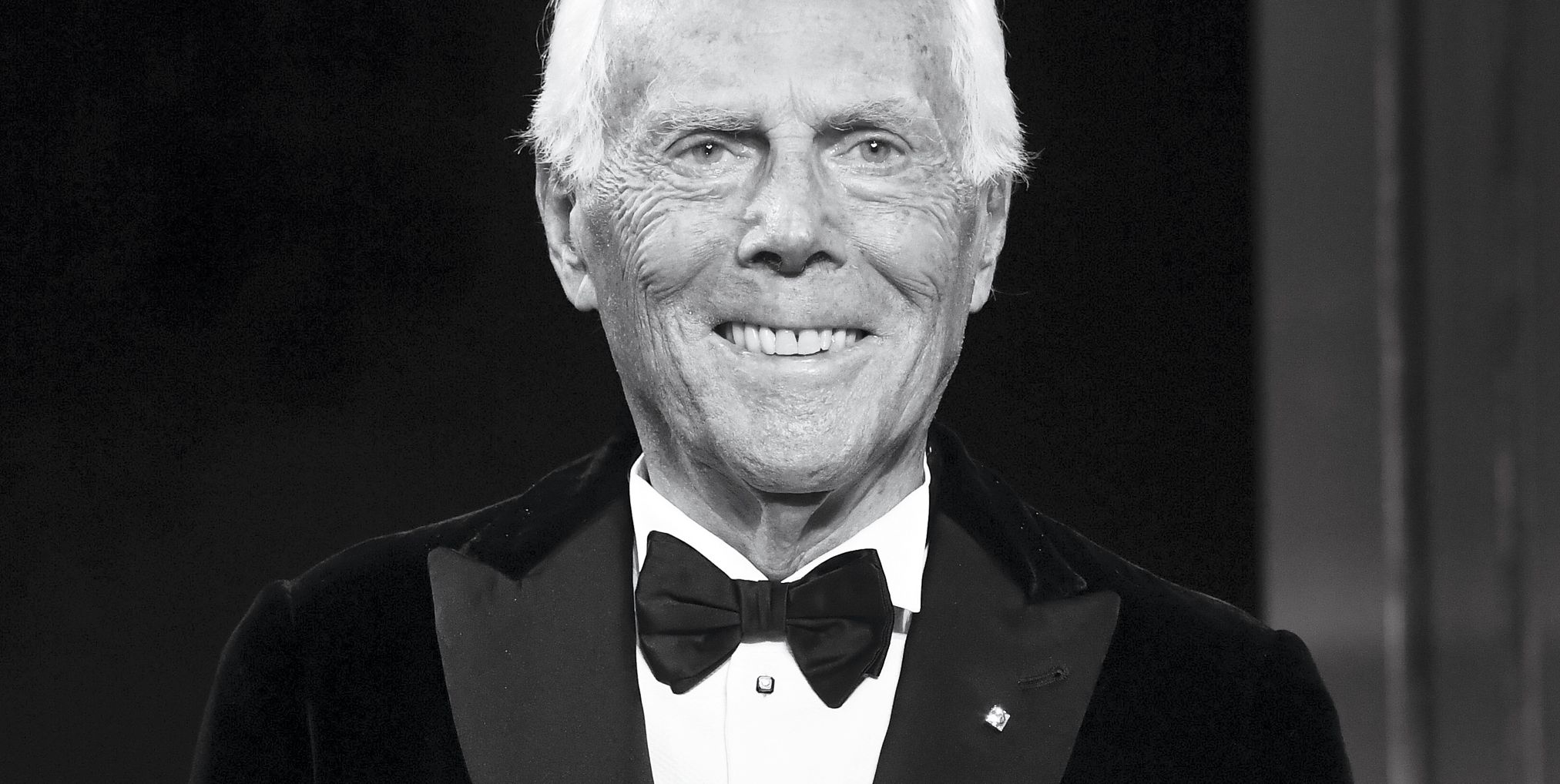
Giorgio Armani has always had a singular vision. Back in late February when cases of COVID-19 were beginning to rise in Italy, the designer made a snap decision to stage a virtual presentation. Here, as part of ELLE’s look at the future of fashion, he reflects on that decisiveness and lessons learned from 2020 so far.
You seem to have adapted incredibly well—and very quickly—to the pandemic, when you made the decision to alter the format of your show. Do you see yourself experimenting with show formats going forward? What do you think the future of fashion shows is?
I believe that there will always be a place for a performative approach to fashion, where you “show” your work to the world. What form that takes, ultimately, is the question here. Do we need live attendance, or can this be done virtually? Maybe we can have more intimate gatherings for the true professionals and mix it with digital to reach a wider public. Going fully virtual is not a good solution I think. It can be done once, but buyers and press need to see clothing up close, in real life.
What I am sure of, is the need to do less and to do it better. So, in the future, I do believe that there will be fewer seasonal shows and that brands will think carefully about staging lavish events unless there is a genuine reason for doing so. On my part, I have decided to optimize time and resources, showing menswear and womenswear together in September, while the Armani Privé Atelier in Milan will be available for individual bespoke appointments. And the next couture show, which will take place in January in my Milan headquarters, will be seasonless and will therefore include garments suitable for winter as well as lighter pieces for summer.
So many brands are struggling to figure out a path forward. You’ve lived and worked through several economic crises—what advice would you offer them?
The crucial thing to make a success of any brand is to have a personal, authentic vision that you genuinely believe in. You then have a reason for your brand to exist, and a compass by which to steer your activities. Stick to your beliefs, don’t be side-tracked by criticism or trends. Listen and take on board what people say, by all means, but always follow your instinct, and have self-belief. You may need to adapt to different circumstances and trading conditions–as we are all doing at the moment–but in the end your single-minded focus will mean that you have a good chance of succeeding. The alternative, which is to get caught up in second-guessing what people might want, or trying to follow transient trends, or responding automatically to things said about you by others… that way lies confusion, not only for yourself and your associates, but also, more importantly, for the consumer.
Certainly this period has given everyone time to reflect—what have you learned over the last few months that will influence your work (or that you feel will influence the industry) going forward?
What I have realized is the truth of something I have been concerned about for a while now –that the problem with luxury fashion over recent years is that it has followed the path of the mass-market fast-fashion brands, churning out far too much ill-conceived product that nobody needs. But the issue lies not only with the manufacturers and producers, but also with the consumers. They too need to consume in a more mindful way. The good thing is that we are now beginning to understand what true luxury is: the freedom to walk outside, to travel, to see our friends and loved ones. In this context we may well have a very different attitude to luxury goods in the future. We may appreciate the simple things in life more, and so when we come to purchase items, we may well do so more thoughtfully, with more consideration, and appreciate them all the more for it.
What developments are you particularly excited about and how can they impact the industry?
I am excited by the opportunity the current situation has given us all to review our lives and our priorities – and that applies to the fashion industry too. If we are smart, we will learn from this experience. I have always stressed the fact that there is a need to slow down, to show and produce less and to return to a position of taking into consideration the real requests of customers. I therefore expect a truer system to emerge, on a more human scale, where creativity and quality are paramount. That will be a good byproduct of what has been a genuinely tragic and trying time.
Your brand has made commitments toward sustainability and social responsibility. Do you feel that events of the last several months will help or hinder those movements?
I am sure they will help. You cannot help but be struck by the difference in the quality of the air and the way nature is reasserting itself now that we are polluting less. Consider the recent data that shows a reduction in pollution over cities in China, and also here in Milan… the clean waters in Venice, the dolphins swimming closer to the port in Pisa. These surely are signals we need to keep in mind when this emergency is over. I have long held that sustainability is an issue that we in fashion, as an industry, must address. That is something that will only be accelerated by the experience of the past few months, where we have seen the benefits to the environment that have resulted from lockdown.
What do you think about the growing push for diversity and inclusivity within the industry?
I cannot comment on how other companies within the industry regard this matter, but I can say that the color of someone’s skin, ethnicity, social background, age, not to mention sexual, political and religious orientation, for me do not make, nor have ever made, any difference. The commitment to act free from any form of discrimination when it comes to hiring and career advancement is deeply rooted in the Armani Group’s value system. Anyone can move up the ranks, at any time: individual abilities and initiatives are the way for this to happen. Diversity is an asset to be nurtured; inclusiveness is a moral and professional duty. I keep it well in mind, and I make sure that my employees do so too.
What old practices do you feel the industry must move away from?
There have been things I have felt we should change within the fashion industry–or as I see it, what has evolved to become a “fashion system”–for a long time now. So, while I do believe there is a role for showing collections on models to bring designs to life, do so many people still need to fly around the world to see them? The decision I made in February to hold my women’s show behind closed doors and live-stream it was, of course, provoked by the COVID-19 situation, but it was an interesting exercise and did demonstrate that there is more than one way to do things effectively. As I said before, one change I definitely believe will happen is that brands will think carefully about how many shows they stage. For instance, we are currently evaluating skipping, or reducing to the minimum, the pre-collections. I think it is sufficient to show only one collection per season, which also includes the pre-collection. I am also committed to putting clothes in store when they match the season outside. No more winter overcoats being offered in July, or linen dresses in January. Let’s get back in step with nature.
How did you manage to stay inspired and creative while in isolation?
That has really not been a problem, as my inspiration comes as much from within as it does from outside stimulation. Creativity is a gift, and if you are a creative person you are compelled to express yourself–it is not a choice. I have fed my curiosity online, through the media, and by looking at books and films, much in the way that I usually do. It is true that I have missed the nuance of human interaction, although I have had a core team isolating with me, so have been more fortunate than many in that I have had social connection throughout. But having new ideas has never been an issue for me, and I have to say that through this extraordinary period, I have felt stimulated to ask many questions, and asking questions always leads to creative answers.
This interview has been edited and condensed for clarity.
This content is created and maintained by a third party, and imported onto this page to help users provide their email addresses. You may be able to find more information about this and similar content at piano.io
“When it comes to energy, we need to look to the future, and when it comes to garments, into the past,” Gabriela Hearst said at a preview of her fall 2020 collection in February, a month before the world, and the industry, got turned upside down. Eco-pioneers like Hearst and Stella McCartney have been calling on the industry to follow their lead for some time now. But with widespread cost-cutting measures in the wake of COVID-19, it remains to be seen if the industry can maintain its commitment to greener production, and if eco-friendly habits like upcycling, re-sale, and clothing rental will suffer as a result of fears about spreading the virus.
Fashion consultant Robert Burke predicts such innovations aren’t going anywhere. “Younger generations,”he says,“are looking for sustainability, non-mass-produced goods, and uniqueness,” so they probably won’t be giving up their Depop habit anytime soon.“The sort of hedonistic luxury that was already feeling old to me before the pandemic is definitely over now,” Hearst says.“I’m certain that there will be a return to craft and quality.”
As for what designers can do, “there’s a misconception that ‘sustainable’ equals ‘expensive,’” Hearst says. “But it’s quite the opposite: It’s about minimizing waste.”
“For years, fashion has been allowed to carry on without any accountability for the environment or human rights,” adds Céline Samaan, founder and executive director of sustainability literacy nonprofit Slow Factory Foundation. “The public now demands more. The only way forward is education, radical transparency, and accountability at the intersection of environmental impact and human rights.” McCartney is equally passionate, calling this moment a turning point. “We cannot have sustainability without solidarity,”she says.“We are seeing that there’s hope—and what we can accomplish when we rise up together.”
This content is created and maintained by a third party, and imported onto this page to help users provide their email addresses. You may be able to find more information about this and similar content at piano.io